
Camlock Couplings for Irrigation: Aluminum Couplings on Pivots, Drip and Flood Lines
Walk any irrigated farm and you will see camlocks. They are the standard quick-connect on irrigation water lines because they are fast, cheap and tough enough for field life. Aluminum is the default material; here is how to spec them properly for ag duty.
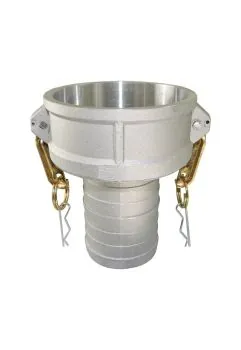
Type C aluminum on irrigation hose — the field-standard quick connect.
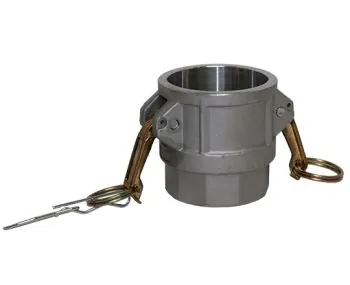
Type D coupler on the pipe side of a pivot or mainline connection.
Why aluminum
- Cost: aluminum camlocks are the least expensive full-metal option, and irrigation does not need stainless
- Weight: a 3” aluminum coupler weighs a fraction of a steel one — crews move them all day
- Corrosion: aluminum handles clean water and most fertilizer solutions at field temperatures; anodized finishes add life
- Availability: sizes ½” to 6” across types A-F, DC and DP are stocked everywhere
Where camlocks are used on an irrigation system
- Pump discharge: coupling the pump outlet to layflat or PVC mainline — the most common single point
- Center pivots: connecting sections and the water supply line
- Drip irrigation headers: mainline-to-submain and flush connections
- Flood/levee irrigation: laying and shifting lines across paddocks
- Fertilizer injection: mixing tanks and chemigation lines (use PP or SS here if fertigation chemicals are aggressive)
Sizing and pressure
Irrigation mains typically run 30-100 psi. A 2” aluminum camlock is rated well above that (the standard rating table gives 2” aluminum about 200 psi working pressure), so sizing is about flow, not pressure. Rule of thumb: 2” for up to ~150 gpm, 3” to ~300 gpm, 4” for larger mains. Match the coupling size to the hose bore, not the pump outlet thread.
Gaskets for field duty
- EPDM handles water and general ag duty with a long field life — the default
- NBR for fuel/lubricant transfer around machinery, not for plain water lines
- Viton/PTFE only for chemigation or aggressive fertigation — unnecessary cost on plain water
- Keep spare gaskets with the pump; field gaskets get sun, grit and abuse
Field installation tips
- Dust caps on every open end — grit in the groove destroys gaskets within a season. This is the single cheapest upgrade for an irrigation setup.
- Support long hose runs — camlock arms are not designed to carry hose weight at the connection. Support the hose so the coupling is not a hinge.
- Close both arms fully. Half-closed arms on a 100 psi line will blow off — usually at the far end of the paddock.
- Rinse after fertigation — fertilizer residue accelerates corrosion on aluminum bodies and hardens gaskets.
- Anodized aluminum for permanent installs — bare castings pit faster in wet, alkaline soils.
Checklist for an irrigation order
- Sizes: nominal hose bore (2”, 3”, 4”)
- Types: A (male threaded), B (female threaded), C (male hose shank), D (female hose shank), E (male hose shank, offset), F (female, offset) as your pump and pipe connections demand
- Material: aluminum (default), polypropylene (chemigation), stainless (permanent corrosive duty)
- Gasket: EPDM
- Extras: dust caps and plugs, gaskets in bulk, anodized finish for permanent installs
Send us your pump outlet, line sizes and pressure and we will confirm the coupling list — with the flow figures.