
Camlock Couplings for Fuel Transfer: Diesel, Gasoline and Lubricants
Camlock couplings are the workhorse quick-connect on fuel transfer lines — tanker trucks, bulk storage, generator refueling skids and machinery service carts all use them. But fuel is not water: the wrong material or the wrong gasket will degrade, harden or fail inside a fuel line. Here is how to spec camlocks for diesel, gasoline and lubricant duty.
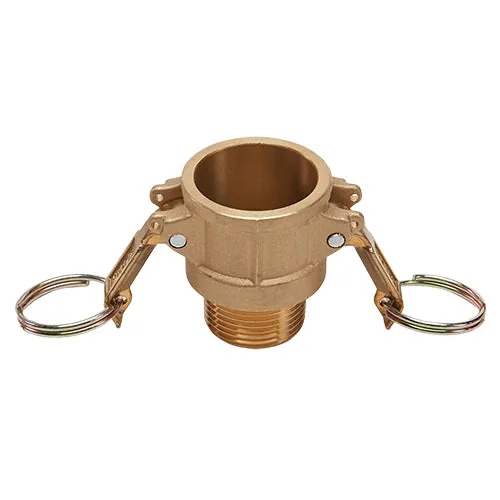
Brass coupler — threaded strength and spark consideration on fuel lines.
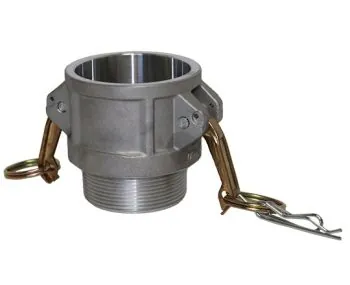
Type B female threaded coupler for NPT fuel-line connections.
Material rules for fuel
| Fuel | Recommended material | Why |
|---|---|---|
| Diesel / heating oil | Aluminum | Light, economical, corrosion-resistant in diesel; the industry standard for diesel transfer rigs |
| Gasoline | Brass (or stainless) | Brass is spark-resistant and unaffected by gasoline aromatics; aluminum is not recommended for gasoline service |
| Aviation fuel / Jet A | Stainless steel | Fuel standards demand full compatibility and traceability; 316 is the conservative choice |
| Lubricants / hydraulic oil | Aluminum or brass | Both handle oils well; match the fitting to the hose and hardware already in the system |
Mixed-material rule applies here too: never pair dissimilar coupling metals (e.g. aluminum body with a brass adapter on a pressure line) — galvanic corrosion and strength mismatch are both real failure modes on fuel rigs.
The gasket is a fuel-specific decision
EPDM is the default water gasket and it is the wrong choice for fuel. EPDM swells and degrades in petroleum products.
- NBR (Buna-N) is the fuel-service standard — oil-resistant, rated for diesel, gasoline, lubricants and most mineral oils, typically -40°F to +250°F working range
- Viton (FKM) where higher temperature or aromatic/aggressive fuel blends are involved (biofuel blends, some aviation applications)
- PTFE for maximum chemical inertness, at the cost of a harder seal — used on specialty chemical fuels
For bulk fuel orders, spec NBR gaskets and a spare set — a hardened gasket is the most common cause of a fuel line leak after a season of service.
Standard layouts
- Pump to hose: Type A (male NPT) on the pump outlet → Type C (male hose shank) into the suction/discharge hose — the classic A+C pair
- Hose to tank / drum: Type D (female hose shank) on the tank fill port, Type E (male hose shank, offset) where a straight shank will not reach
- Tanker discharge: 2” to 4” aluminum, A at the valve outlet, C into layflat or hardwall transfer hose
Pressure reality on fuel lines
Fuel transfer is a low-to-medium pressure job. Reference values from the standard camlock rating table: 2” aluminum is rated around 200 psi working pressure — far above the 50-150 psi typical of transfer pumps and gravity flow. As with water service, size for flow, not pressure: 2” for up to roughly 150 gpm, 3” to ~300 gpm, 4” for bulk loading rates.
Safety checklist for fuel duty
- Bonding and grounding — camlocks are metal, but the whole transfer system (truck, hose, receiving tank) must be bonded and grounded before flow starts. The coupling does not replace grounding.
- Never use camlocks for pressurized gas, LPG or steam — cam and groove couplings are not rated for gas service.
- Release pressure before uncoupling — bleed the line, then open the arms. A pressurized fuel line that comes apart sprays fuel and creates an ignition risk.
- Inspect gaskets monthly on fuel rigs — fuel degrades rubber faster than water; look for swelling, cracks and hardness.
- Cap open ends — dust caps and plugs keep grit out of the groove; a fuel line with a gritty seal leaks and drips.
Checklist for a fuel transfer order
- Sizes: match the hose bore (1½”, 2”, 3”, 4”)
- Types: A + C (pump to hose), D + E (hose to tank) as the layout requires
- Material: aluminum (diesel), brass (gasoline), stainless (aviation/specialty)
- Gasket: NBR (standard fuel), Viton (high-temp/aggressive blends)
- Extras: dust caps and plugs, spare gaskets
Tell us your fuel type, line sizes and pump pressure and we will confirm the coupling set — with the right gasket for the fuel.
Related guides
- Camlock gasket selection: NBR vs EPDM vs Viton — why the gasket decides fuel vs water service
- Camlock material guide: aluminum vs stainless vs brass vs PP — full comparison table
- Camlock size chart — measuring the hose bore correctly
- Camlock pressure rating chart — working pressures by material and size